


The Theory of Constraints (TOC) is a management philosophy aimed at improving organizational performance by focusing on the most critical limiting factor, known as the constraint or bottleneck. This approach is essential for enhancing profitability and operational efficiency.
Core Concepts
1. Constraints and Bottlenecks
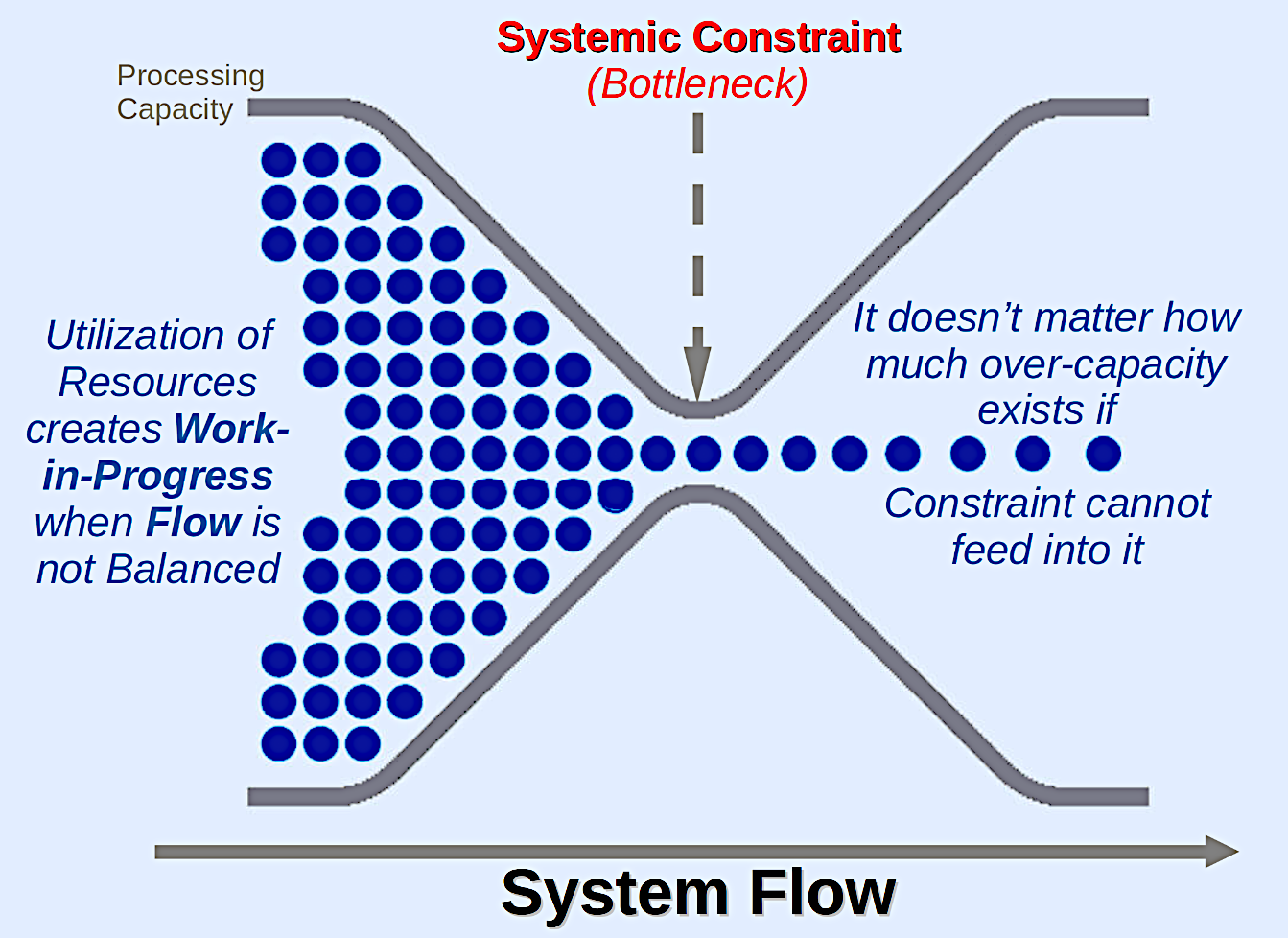
- Definition: A constraint is any factor that limits an organization from achieving its goals, typically profit.
- Bottleneck: Often, the constraint manifests as a bottleneck in the production process, which restricts overall throughput.
- Leverage Point: If a constraint limits systemic performance, that's your systemic leverage point.
2. Five Focusing Steps
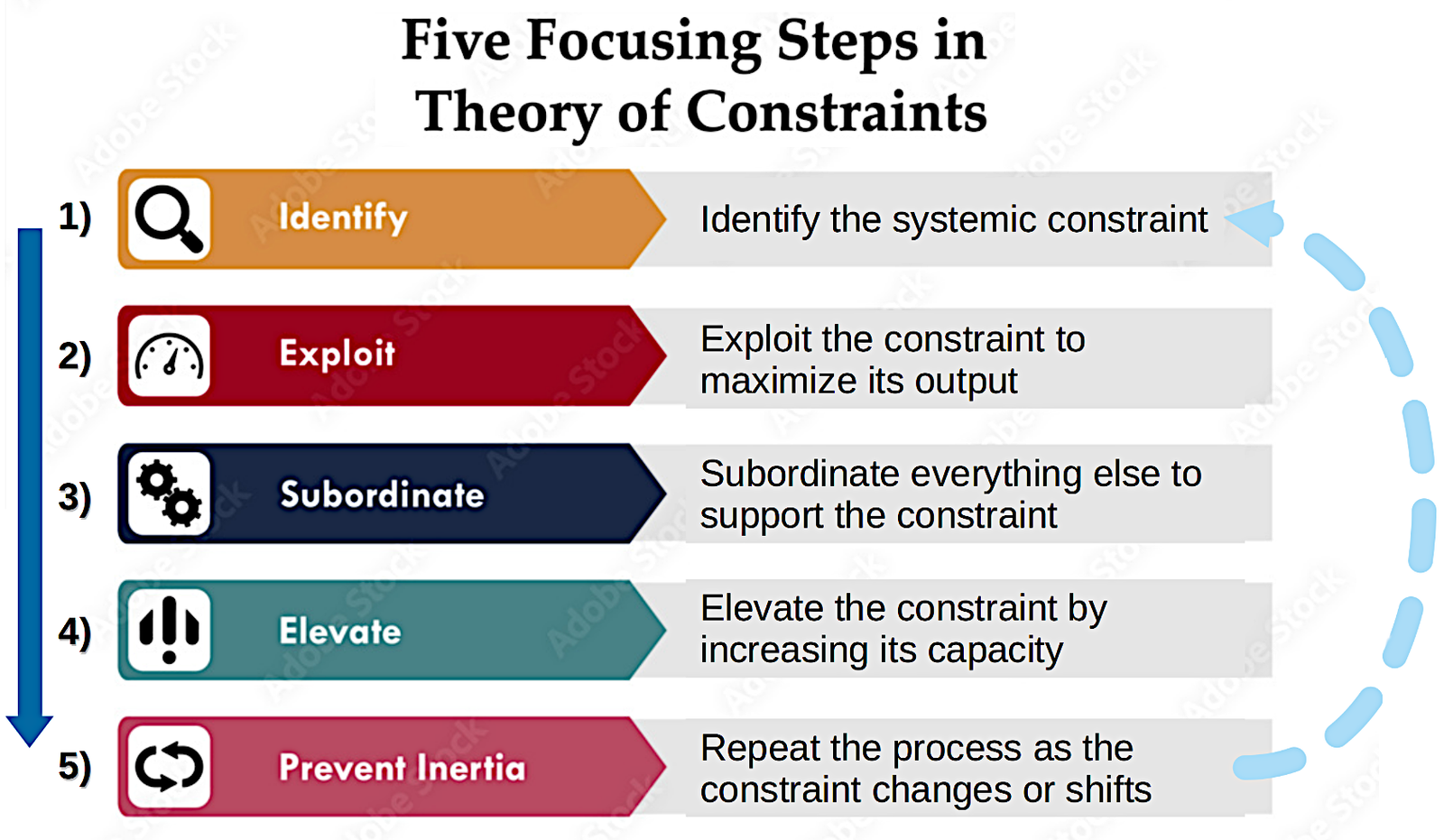
TOC employs a structured methodology called the Five Focusing Steps to identify and manage constraints:
3. Throughput Accounting
- Focus: TOC emphasizes throughput, which is the rate at which a system generates revenue.
- Core Measures: Key metrics include throughput, inventory, and operating expense, guiding decision-making and performance evaluation.
Benefits of Implementing TOC
- Increased Profitability: By focusing on constraints, organizations can significantly enhance their profit margins.
- Improved Capacity: Optimizing the constraint allows for greater production output.
- Reduced Lead Times: Streamlining processes around the constraint leads to faster product flow.
- Lower Inventory Levels: Efficient management of constraints reduces work-in-process inventory.
The Theory of Constraints provides a powerful framework for organizations seeking to improve their operational efficiency and profitability by systematically addressing their most pressing limitations.